The week commencing the 3rd of February started off as usual, netball fitness at 7:30 on Monday morning, followed by a 5.93k run on the Tuesday, including three successful hill sprints, soon coming to the realisation that hill sprints aren’t the most enjoyable. Then on the Wednesday I travelled to Manchester for our first netball away match of the term (see the picture below) and within the first three minutes, of the first quarter, I went over on my ankle (which is a regular occurrence).
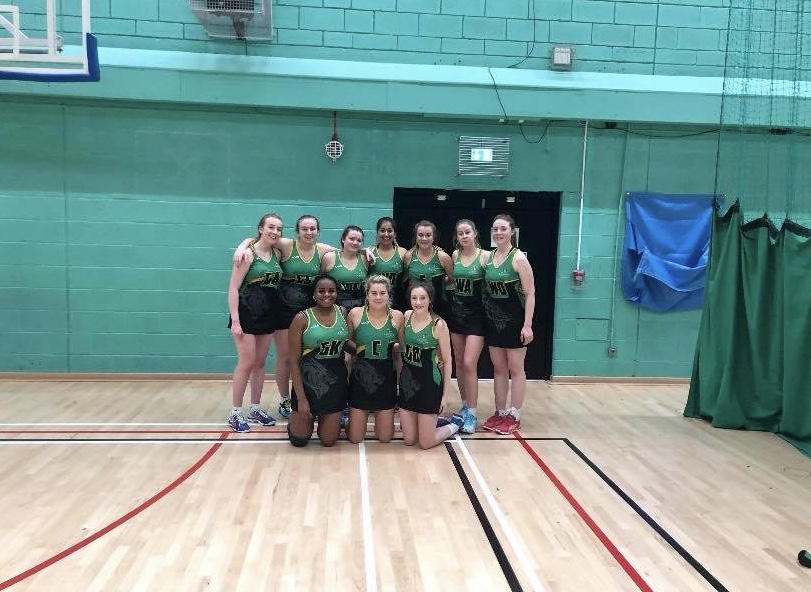
I was sat on the bench for the rest of the match watching on, realising that I had little concern for the match, which isn’t great considering I’m the captain, I felt more concerned about the fact that I wouldn’t be able to run for a few weeks, upon reflection I attributed this to my fear of failure.
Fear of failure is referred to as the motive to avoid failure connected with antiparty shame in evaluative situations; it’s a unidimensional construct which shame being the chief fear of failure (Gustafsson, Sagar, & Stenling, 2017). According to Conroy and Metzier (2004), the fear of failure involves behavioural, cognitive and emotional experiences that can stimulate the pursuit of avoidance goals and strategies, such as mastery-avoidance goals, self-handicapping and low achievement. One qualitative study on fear of failure among elite adolescent athletes showed that fear of failure increased negative cognition and concerns about failure, making them feel worried, stressed, tense and scared, and decreased their motivation and self-perception; to adverse effects such as lowered performance (illustrated in the diagram below) and heightened anxiety (Sagar et al, 2009).
Personally, it took me a while to understand why I attached numerous negative emotions with training or competing in sport (see the table below for a full list), especially increased anxiety, a lack of motivation and increased stressed. Yet as I got older I began to comprehend that it stemmed from a young age when I swam competitively. Training 16 hours a week and competing most weekends; I always feared performing badly mainly because of the amount of time, money and effort my parents were putting in, causing me to attribute my fear of failure to several aspects of my life as I got older.

Consequently, spraining my ankle caused me to engage in mastery-avoidance goals, particularly self-handicapping, through-out the third week of my training plan. Experiencing a lack of motivation, positive thoughts, energy and drive. Self- handicapping is explained as proactively reducing effort and producing performance excuses to protect one’s self from negative feedback (Berglas and Jones, 1978). One study by Prapavessis and colleagues (2003) noted that self-handicapping within sport was directly associated with poorer practice and nutrition, for me this couldn’t be more visible, as my nutrition completely went out the window through skipping meals, earring unhealthy (see photos below for some evidence) or snacking consistently, pairing this with my ankle gave me the perfect excuse to go off track. Also, fear of failure can lead to emotion-orientated coping strategies, such as passivity and disengagement (Kuczka & Treasure, 2005); disengagement is explained as the process or action of withdrawing from involvement in a situation, group or activity (Boardely & Kavussanu, 2007). For me, this has been evident in many challenges that I’ve faced, whether that be in form of procrastination when I do university work, retreating from social groups that I don’t feel comfortable in or most importantly neglecting training when I face the slightest adversity.
However, inadequate research has been conducted examining self-handicapping in sport, particularly within elite level performers as well as some studies suggesting that self-handicapping is rare in aa sport settings (Rhodewalt, 1994; Hausenbles & Carron, 1996). Moreover, one study by Gustafsson and colleagues (2011) on elite sprinters suggested that fear of failure did not have a statistically significant effect physical/emotional exhaustion and sport devaluation which is said to predict self-handicapping within a sporting environment; yet this does not override the sum of evidence indicating that self-handicapping is a maladaptive coping strategy causing motivational difficulties that is likely to have a negative effect on long-term performance and development (Prapavesis et al, 2003).
At the beginning of the following training week I set a goal to challenge and correct these maladaptive beliefs through challenging my own self-talk, commonly referred to as an inner voice that provides a consistent monologue, combining conscious thoughts with unconscious beliefs and biases (Tod, Hardy, & Oliver, 2011). Conroy & Metzler (2004) stress that we change behaviour simply by choosing what we say to ourselves, this was a simple and effective change, I began to simply say “I can do it” every time a negative thought occurred and I reminded myself why I wanted to face this challenge in the first place; it wasn’t to become the next Mo Farah but to enjoy and challenge myself.
References
Boardley, I. D., & Kavussanu, M. (2007). Development and validation of the moral disengagement in sport scale. Journal of Sport and Exercise Psychology, 29(5), 608-628. Retrieved from: https://core.ac.uk/reader/1631160
Conroy, D. E., & Metzler, J. N. (2004). Patterns of self-talk associated with different forms of competitive anxiety. Journal of Sport and Exercise Psychology, 26(1), 69-89. Retrieved from: https://whel-primo.hosted.exlibrisgroup.com/primo-explore/openurl?sid=google&auinit=DE&aulast=Conroy&atitle=Patterns%20of%20self-talk%20associated%20with%20different%20forms%20of%20competitive%20anxiety&id=doi:10.1123%2Fjsep.26.1.69&title=Journal%20of%20sport%20%26%20exercise%20psychology&volume=26&issue=1&date=2004&spage=69&issn=0895-2779&vid=44WHELF_BANG_VU4&institution=44WHELF_BANG&url_ctx_val=&url_ctx_fmt=null&isSerivcesPage=true
Tod, D., Hardy, J., & Oliver, E. (2011). Effects of self-talk: A systematic review. Journal of Sport and Exercise Psychology, 33(5), 666-687. Retrieved from: https://whel-primo.hosted.exlibrisgroup.com/primo-explore/openurl?sid=google&auinit=D&aulast=Tod&atitle=Effects%20of%20self-talk:%20A%20systematic%20review&id=doi:10.1123%2Fjsep.33.5.666&title=Journal%20of%20sport%20%26%20exercise%20psychology&volume=33&issue=5&date=2011&spage=666&issn=0895-2779&vid=44WHELF_BANG_VU4&institution=44WHELF_BANG&url_ctx_val=&url_ctx_fmt=null&isSerivcesPage=true
Hatzigeorgiadis, A., & Biddle, S. J. (2008). Negative Self-Talk During Sport Performance: Relationships with Pre-Competition Anxiety and Goal-Performance Discrepancies. Journal of Sport Behavior, 31(3). Retrieved from: https://www.researchgate.net/profile/Stuart_Biddle/publication/291771604_Negative_self-talk_during_sport_performance_Relationships_with_pre-competition_anxiety_and_goal-performance_discrepancies/links/56cc032a08ae96cdd06feeec/Negative-self-talk-during-sport-performance-Relationships-with-pre-competition-anxiety-and-goal-performance-discrepancies.pdf
Kuczka, K. K., & Treasure, D. C. (2005). Self-handicapping in competitive sport: Influence of the motivational climate, self-efficacy, and perceived importance. Psychology of Sport and Exercise, 6(5), 539-550. Retrieved from: https://www.sciencedirect.com/science/article/pii/S1469029204000573
Gustafsson, H., Sagar, S. S., & Stenling, A. (2017). Fear of failure, psychological stress, and burnout among adolescent athletes competing in high level sport. Scandinavian journal of medicine & science in sports, 27(12), 2091-2102. https://onlinelibrary.wiley.com/doi/pdf/10.1111/sms.12797?casa_token=ExF8FYdsYX0AAAAA:WNMm6trlC1qgNQBQdGhJ6QiY9wJ7kjRxb5Vz_Vq89Fdu5WlKUm7nMYdsev_KBoGolbT6m8z1NcVZmeCA
Conroy, D. E., & Elliot, A. J. (2004). Fear of failure and achievement goals in sport: Addressing the issue of the chicken and the egg. Anxiety, Stress & Coping, 17(3), 271-285. Retrieved from: https://www.tandfonline.com/doi/full/10.1080/1061580042000191642?casa_token=jjgQcGNhYmIAAAAA:LIf_AOGaYAp7NgRGg8aNkL7j_ksnjJO_BIf84McbEKk6LAVJZ3cyBvSX9f2t30_oRIUJiI1EPtucQg
Hatzigeorgiadis, A., & Biddle, S. J. (2008). Negative Self-Talk During Sport Performance: Relationships with Pre-Competition Anxiety and Goal-Performance Discrepancies. Journal of Sport Behavior, 31(3). Retrieved from: https://www.researchgate.net/profile/Stuart_Biddle/publication/291771604_Negative_self-talk_during_sport_performance_Relationships_with_pre-competition_anxiety_and_goal-performance_discrepancies/links/56cc032a08ae96cdd06feeec/Negative-self-talk-during-sport-performance-Relationships-with-pre-competition-anxiety-and-goal-performance-discrepancies.pdf
Jones, E. E., & Berglas, S. (1978). Control of attributions about the self through self-handicapping strategies: The appeal of alcohol and the role of underachievement. Personality and social psychology bulletin, 4(2), 200-206. Retrieved from: https://journals.sagepub.com/doi/pdf/10.1177/014616727800400205?casa_token=2mjFZO7qyLwAAAAA:bmoK8QVLy8K6Elm9YfqJst2cFIlZXpJQ_O9VdjUrprE6GjuQN_AZiXxt5tuKJ3WfDT7ryJK9Y16oPA
Martin, L. J., Burke, S. M., Shapiro, S., Carron, A. V., Irwin, J. D., Petrella, R., … & Shoemaker, K. (2009). The use of group dynamics strategies to enhance cohesion in a lifestyle intervention program for obese children. BMC Public Health, 9(1), 277. Retrieved from: https://link.springer.com/article/10.1186/1471-2458-9-277
Boardley, I. D., & Kavussanu, M. (2007). Development and validation of the moral disengagement in sport scale. Journal of Sport and Exercise Psychology, 29(5), 608-628. Retrieved from: https://core.ac.uk/reader/1631160
Tod, D., Hardy, J., & Oliver, E. (2011). Effects of self-talk: A systematic review. Journal of Sport and Exercise Psychology, 33(5), 666-687. Retrieved from google scholar: https://scholar.google.com/scholar?hl=en&as_sdt=0%2C5&q=Tod%2C+Hardy%2C+%26+Oliver%2C+2011&btnG=
Sagar, S. S., Busch, B. K., & Jowett, S. (2010). Success and failure, fear of failure, and coping responses of adolescent academy football players. Journal of Applied Sport Psychology, 22(2), 213-230. Retrieved from: https://www.tandfonline.com/doi/full/10.1080/10413201003664962?casa_token=zXbHaDmEkgMAAAAA:2laZ0suufkeA4DuJHMBA5X7GZo83Y4jy3sNXr8QEz3vHc_quGxEXgi5_kyioyC0H20rS8tqFH4rISw
 Sarahs road to a marathon